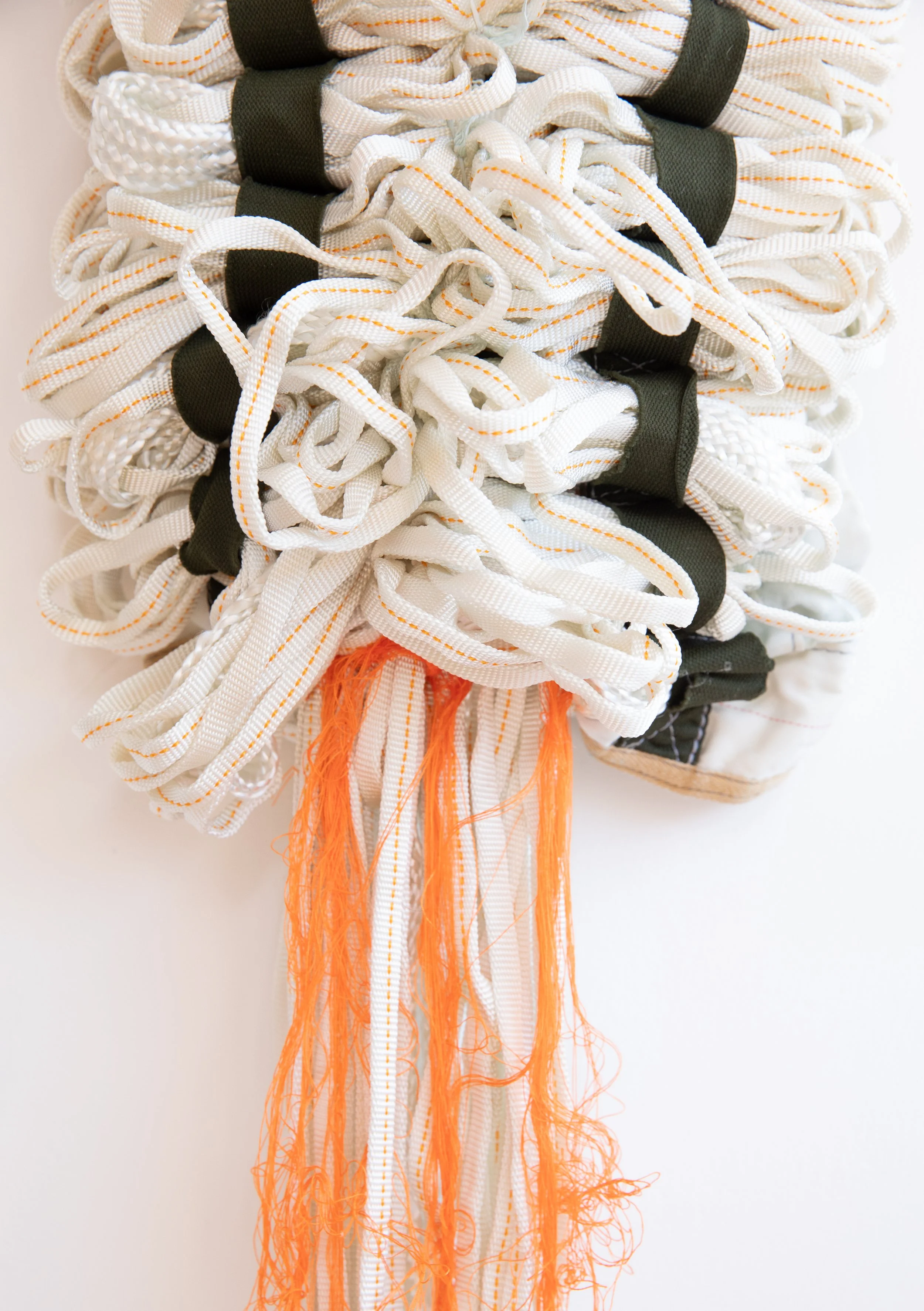
Responding to Things
(writings on methodology for This is What It’s Like)
Big thing, big room. There you go. It is yours now it is yours forever.
Response comes from re meaning again and spondere meaning pledge. Your response to the big thing is the making of the pledges it gives you. Three pledges. You are for it as it is for you. You give time. It returns itself in three parts. Those are the pledges. You can’t choose which pledges you take or the contents. You can catch them if you look for falling things, unraveling ones. You can mould them if the room is big enough. And you can choose to keep them to yourself or share them with the big thing. And sometimes if you share them with the big thing it won’t even mind. They are for you. The big room has space in it. It can fill quite quickly.
First pledge: presence. What sits in front of. The monster of it all. Magnetism. Thick and unavoidable. Like a hot flush. Like a no thinking impulse. Like grabbing. Awash with the thing as you meet it. A big thing defining itself as big because there is something not nothing for you here. Some things will give you little presence, but here it is all you can focus on. Air changes or heat rises or something else happens that affects the parameters of the moment. The big thing is a canvas pinned to each corner. It is stretched and it is kept there and nothing else in that moment exists without its sheen. It then remains as the underlining. The atmosphere of something is always the first part and the base of everything else of you and that thing. Sometimes something has such a presence that the underlining isn’t little like from a biro it is wide like from one of those pens you hold with your whole hand rather than in-between your fingers. And it colours back and forth over your relationship with the thing. You can pledge just this if you like to. Keep on just the big thing’s beauty or its horror. Some things get less interesting if you look more, although most of the time that is like keeping the wrapping on all of your presents.
Second pledge: texture. What sits on. The innkeeper. Noticeable. Bumpy even if it isn’t bumpy. Like a tapping. Like a just popping by. Like touching. A being caught by the thing as you give it attention. A big thing you can call big because you are caring for it as so. Some things wonderful, some things vile. There might be a desire to offer corrections and move a hair that could be out of place. Caught in the thing’s grasses paying close attention to the soft ones and the itchy ones. This is usually the returned-to pledge. It is not the sea air and it is not submersion, it is the having your feet under a bit. It is the bit you always go past. The sea air will draw you to the shallow water and submersion starts with getting wet. Each pledge passes through the texture. Grains, grasses, waters, the fibres of it all.
Third pledge: depth. What sits behind. The dweller. Rich. With lots of layers and lots of colours. Like a diary. Like a what are you thinking about - oh nothing. Like holding. Everything getting subheadings. A big thing that can be nothing apart from big because you have spent the time with it giving you so much. You can swim in it and move your arms and legs about and have a wading feeling like you are moving through something. Being with something. You can swim in it and look up at the sky and it is both the water and the sky. Here maybe you can choose what to do with it a bit. It is a point of more control. You can’t wrestle it but you can tussle with it and bend it in your ways. And you can paint parts of it or write footnotes. And everything with it gets bigger which means there is more space to make little choices on how you look at it. More space more space. More space gives more views and little nooks to sit in if you want a break to nod your head and consider before diving all the way back in. Head under. It wraps you now.
This is an essay from This is What It’s Like. Click here for more information